codeAK
Empowering K-12 educators with free content and news in computer science,
digital literacy, and artificial intelligence.

"The keyboard may prove to be a key (pun intended) learning gap for many students whose tech skills are borne from touchscreen devices, like smartphones and iPads." — Kids aren't learning to type anymore, Chase DiBenedetto - Mashable
This Month's PickDigital Safety Resources and CISA Presentations for Your SchoolK-12 | Free | Administrators, educators, counselors, and families Thank you to everyone who attended Digital Safety in the Age of AI at the School Safety and Well-Being Summit . The session resources are at education.alaska.gov/cybersecurity, organized by role for administrators, educators, counselors, families, and students. You can also request a presentation from the Cybersecurity and Infrastructure Security Agency (CISA). CISA will present to a classroom, a school, or a whole district, at no cost. Topics include bystander reporting, child exploitation online, bullying and cyberbullying, cybersecurity, and threat assessment. You choose the topics that fit your staff or students. DEED reviews each request and connects you with CISA. For district IT: CISA's new K-12 Cybersecurity Foundations package, released August 12, gives small districts a starting point on login protection, tested backups, and incident response. Read CISA's Getting Started Guide Dates and Deadlines
Spotlight on AlaskaiDidaContest 2027: What Are Your Students Making?Grades K-12 and ASTE members | Class or individual project | Cash prizes 
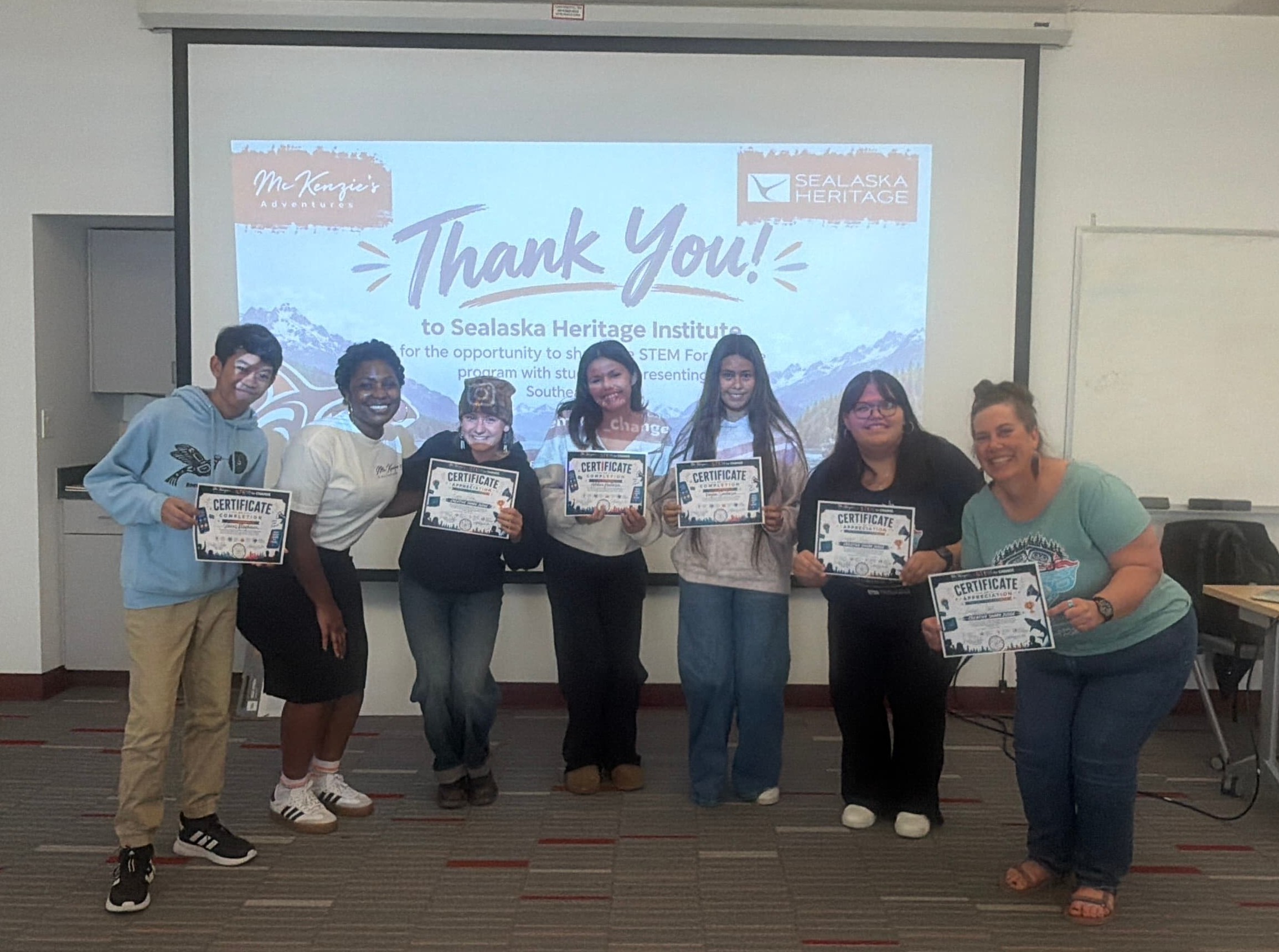
Much of the national conversation about technology in schools is about how to limit it. ASTE's iDidaContest starts from the other end: students using technology to create something worth sharing. It is Alaska's longest-running digital media contest for students and educators. The 2027 contest has nine categories covering video, sound, design, publishing, games and interactive media, and AI-enhanced work. iDidaRoots is for projects that honor, explore, or revitalize Indigenous languages, traditions, and knowledge systems. Each category lists the Alaska standards it connects to, and students compete in elementary, middle, and high school divisions. ASTE members can enter their own work. Teachers can build a class project around one category, and schools can run a local contest and send in their top entries. Families can ask their school about entering. Entries are due January 31, 2027. See iDidaContest categories and rules | See the 2026 winners STEM for Change in Southeast AlaskaStudents | Five-day program | Juneau and Klawock This fall, Sealaska Heritage Institute is partnering with McKenzie's Adventures to run STEM for Change, a five-day technology program for Alaska Native youth, with cohorts in Juneau and Klawock. Students choose a challenge in their own community, such as language revitalization, fisheries, sustainable tourism, or small business. Students research their challenge, build a working prototype, and pitch their solutions to Elders, educators, and local industry representatives. Students also prepare and sit for the Microsoft Azure Fundamentals certification exam, an industry-recognized credential in cloud computing. The top three teams from each cohort will present their work at ASTE 2027 in February as part of iDidaImpact, a new iDidaContest category. Watch the iDidaContest page for details. Learn about STEM for Change | Follow STEM for Change on Instagram | See the iDidaContest page Curriculum CornerDay of AI's New PreK-5 CurriculumGrades PreK-5 | Unplugged lessons | Free | Educators Day of AI released a free, grade-by-grade AI literacy curriculum for PreK through grade 12 in August. The early grades are built so young students learn how AI works without using AI tools. Pre-K starts with people, nature, and machines. Grade 1 looks at how technology finds patterns and uses them to make predictions. Grade 2 covers how data is collected and how AI learns from examples. Lessons come with slides, student activities, and assessments. Day of AI ran free webinars on the PreK-5 units in late September; check its professional development page for recordings and upcoming sessions. Browse the Day of AI curriculum | See Day of AI professional development U.S. Media Literacy Week, October 26-30K-12 | One lesson or a full week | Free | Educators and families NAMLE hosts the 12th annual U.S. Media Literacy Week, with activities and resources for educators, students, and families. Schools and organizations can register to take part. The Common Sense AI lessons below fit the week, especially the ones on how chatbots are designed to feel human. Short AI Lessons for Grades 6-12Grades 6-12 | 20 minutes or less | Free | Educators Common Sense Education now has 16 AI literacy lessons, each 20 minutes or less. New ones cover how AI learns from data and how chatbots are designed to feel human. They fit an advisory period or a warm-up. Common Sense also finished its K-12 Digital Literacy and Well-Being curriculum this summer with a new high school program. Student OpportunitiesNational Cyber League Fall SeasonHigh school, age 13+ | Weekend events | Paid, $45 | Online An online cybersecurity competition covering forensics, cryptography, log analysis, and web security. The Individual Game runs October 23-25 and the Team Game November 6-8, with teams of up to seven. A practice Gym is open through December 11. Each player gets a Scouting Report to share with colleges. Remote schools with a stable connection can compete. Congressional App ChallengeGrades 6-12 | Multi-week project | Free | Students Students build an app in any language, alone or in teams of up to four, and submit it with a demo video. Alaska's winner is recognized by our member of Congress. The deadline is 8:00 AM Alaska time on October 26, so plan to submit the day before. Samsung Solve for TomorrowGrades 6-12, public schools | Short entry | Free | Teacher submits Student teams propose a solution to a problem in their own community. A teacher at a school that is at least 50% publicly funded submits a five-question entry. The top 500 schools win prizes, from $500 up to $50,000 for the national winner. Girls Who Code Pathways, Spring 2027Grades 9-12 | 7 weeks, self-paced | Free | Virtual A free, virtual program for high school girls and non-binary students, with no coding experience required. Participants pick tracks such as AI, game design, and cybersecurity, work at their own pace, and build projects with mentors and peers. The spring program runs March 1 to April 16. Apply by October 28 for priority consideration. The final deadline is December 16. For LeadersStudent AI Use Is Rising Faster Than School PolicyAdministrators | 10-minute read RAND's American Youth Panel found that AI use for homework among students in middle school and up rose from 48% in May 2025 to 62% in December 2025. In December, 67% agreed that more AI use for schoolwork will harm critical thinking. About a third said their school had a schoolwide AI policy. Source: RAND, published March 17, 2026. Survey collected December 2025, 1,214 respondents ages 12-29. Alaska's AI Guidance for DistrictsAdministrators | 20 minutes DEED's district guidance page holds a model board policy, a due-diligence checklist for vetting AI vendors, and recommended training topics for staff. These are recommendations for local decisions, not requirements. Pair it with the RAND findings above if your board is revising AI guidance this year. Why AI Made Me a Better PrincipalAdministrators | 5-minute read The true metric of AI in school leadership is not time saved, but the presence and clarity restored to daily decision-making. By Monika Vereb. September 23, 2026. Professional DevelopmentPlan Now for the Hour of AI in DecemberK-12 | 1 hour | Free | Educators CS Education Week falls the week of Grace Hopper's December 9 birthday. The Hour of Code is now the Hour of AI, and the older coding activities are still available. Minecraft Education has AI-themed options, including one on spotting deepfakes. New 2026 activities usually post in mid-November. See the Minecraft Hour of AI activities | Visit Hour of Code ASDN AI Courses for CreditPK-12 | 3 credits | Paid | Educators Two self-paced courses, both ED 565, graded, UAA PACE 500-level. The Efficient Teacher, Using AI to Work Smarter
Register for The Efficient Teacher Unlocking the Potential of Artificial Intelligence in Education
Share ideas for the next issue. Have a school project, local event, or resource worth sharing? Send it to anthony.white@alaska.gov.
✉️ anthony.white@alaska.gov This newsletter is an initiative of the Division of Innovation & Education Excellence. We prioritize free resources and mark anything paid. You are receiving this email because you signed up to receive information on K-12 computer science and digital literacy. |