codeAK
Empowering K-12 educators with free, open-source content and
news in computer science, digital literacy, and artificial
intelligence.

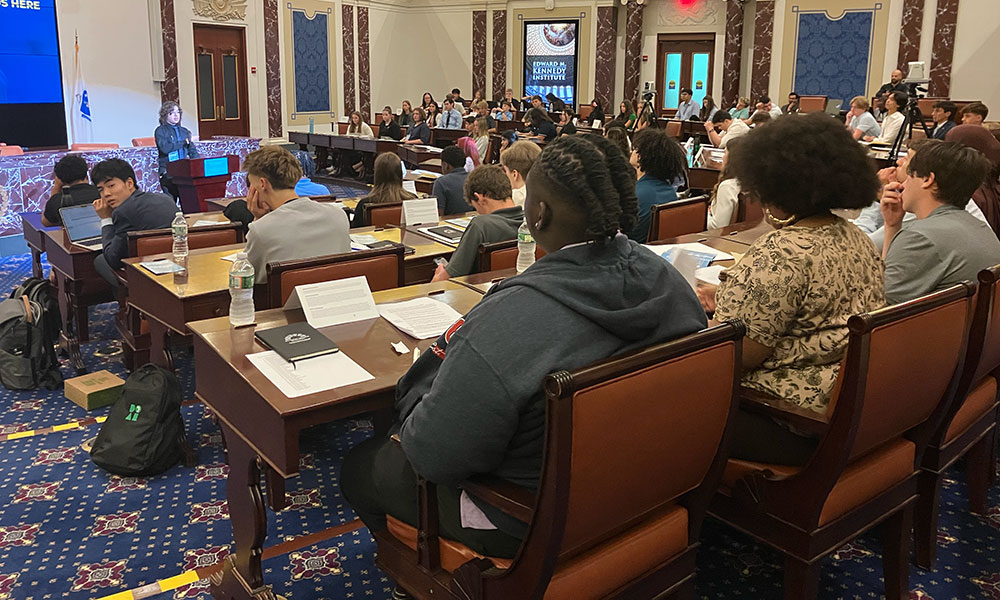
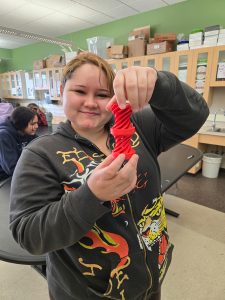
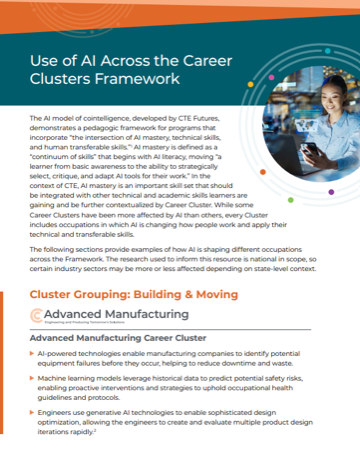
"Learning computer science is less about the code you produce and more about the habits of mind you build. Writing code from scratch teaches you to think in systems, to reason about cause and effect, to hold an entire logical structure in your head and interrogate it. Those capacities do not become obsolete when the tools change." Spotlight on AlaskaStatewide Students Shape AI GuidanceStudents from all 50 states recently came together through Day of AI to draft and debate the STUDENTS FIRST Act of 2026, a student-led framework for the responsible use of AI in K-12 schools. For Alaska, the story also includes Kenai student Chase Johnson, who told The 74 that AI can help with personal projects and business ideas, but students still need to do the hard thinking themselves. This work highlights student voice, practical AI literacy, and the questions Alaska students are already asking about how the technology should be used in school. Bering Strait Built Its Own English CurriculumBering Strait School District went looking for a new English curriculum in 2024 and did not find one worth buying. Vendors quoted $300,000 to $500,000 before renewals and training, for programs built on excerpts and set far from the 15 communities the district serves. In 2024-25, 5.3% of BSSD students in grades 3-9 read at or above grade level, against 32.7% statewide. So the district built its own. Director of Curriculum and Instruction, Alex Roberts, drafted seven grade levels of five units each in about 18 months, leveraging AI to cover ground one administrator could not have managed alone. Teachers, parents, and administrators shaped what went in. The curriculum aligns to Alaska ELA standards and runs on complete books, including Alaska and Native authors, so students read work set in places they recognize. KNOM is running the story in three parts. Part 1 | Part 2 | Part 3 3D Printing and Wind Turbines at Mount EdgecumbeStudents in the T3 Alaska program at Mount Edgecumbe High School printed things their school needed: more than 20 fidget toys for classmates, calculator covers, replacement tape dispenser parts, and a modification to the graduation podium. They also prototyped 3D-printed tags for the settling plates the Sitka Sound Science Center uses to track invasive marine invertebrates. The work went past the printer. Students wired sensors to Raspberry Pis, one of them standing up a student Minecraft server. Others audited campus energy use and built miniature efficient homes. Two took wind turbine blades to the Alaska Clean Energy Olympics, placed in the top three in Southeast Alaska, and recorded the highest energy output of any team in the region. T3 coach Jessie Smyke led the program. Curriculum CornerThe AI Collective: Privacy, Safety, and Tool ReviewsThe AI Collective publishes privacy and safety reports on AI tools already in use in K-12 classrooms. Search by tool name, vendor, or keyword, then filter by grade level, privacy risk, environmental impact, audience, or use case. Each tool gets a short overview with a privacy rating and a full evaluation behind it. CTE Clusters and AI IntegrationAdvance CTE’s Responsive By Design lays out how AI is actually used across the industries behind all 14 Career Clusters, with implementation strategies for states building guidance or standards. For CTE planning it is a way to treat AI literacy as a skill that transfers between pathways instead of a unit bolted onto one course. Core academic teachers can use it too. The examples give a concrete answer to why a student in any subject should understand what these tools do. Related: NSF’s TechAccess: AI-Ready America will fund a national network of state and territorial hubs to expand AI literacy and workforce skills, reaching beyond K-16 into businesses and public organizations. Worth watching for Alaska’s grantee and what it opens up for students. Upcoming EventsASTE 2027 Call for Proposals Closes September 30ASTE is taking session proposals for its 2027 conference, February 13-15 at the Hotel Captain Cook in Anchorage. Proposals are reviewed on a rolling basis across six strands: IT Professionals, Administration, Student Impact, College and Career, EmTech, and School Safety. If something is working in your classroom or district, this is the room to bring it to. The timing is worth noting. The U.S. Department of Education’s August 20 Dear Colleague Letter asks schools to judge technology by instructional value and evidence rather than by whether it happens on a screen, and to be able to say what problem a tool solves and what proof exists that it works. Educators trading verified results with each other is that standard in practice. ASTE 2027 conference | Submit a proposal | AI Planning Partners for ASTE 2027 NASA TechRise Student Challenge
NASA’s TechRise Student Challenge is expected to open in September. Teams of four or more students in grades 6-12 write a three-page proposal for an experiment they want to fly. Sixty winning teams nationwide each receive $1,500 to build it, a flight box with a microcontroller kit, weekly mentorship from NASA advisors, and a spot on a high-altitude balloon flight at roughly 70,000 feet. Entry is free, no travel is required, and students do not need prior electronics or coding experience. Winning teams build from January to May. This fits a regular class, a school club, a gifted and talented program, or a correspondence program with a supporting teacher. Entries are judged within each state, and NASA anticipates at least one winner per state when enough eligible entries come in. Alaska has not had a winning team in any of the five cycles so far. Pre-register at futureengineers.org/nasatechrise. Q&A webinar: Wednesday, September 9, 4:00 PM. Register for the Q&A Alaska Science Olympiad Registration Is OpenAlaska Science Olympiad is a statewide hands-on STEM competition organized at the University of Alaska Fairbanks by Alaska EPSCoR, the UAF College of Engineering and Mines, the UAF College of Natural Science and Mathematics, and the UAF Makerspace. Registration is open for the 2027 season, with teams committing to compete at UAF in Fairbanks on April 3, 2027. Division B teams can have up to 15 students, and after-school clubs or programs are eligible to register. High school teams are not left out. Division C runs separately at UAA in Anchorage. Questions on either division go to Courtney Breest at cfbreest@alaska.edu. NCWIT Aspirations in Computing — Applications Open September 1The AiC High School Award recognizes 9th-12th grade students for computing-related achievement and interest. Applications for the 2026-27 season open September 1, 2026 and close October 27, 2026. Applicants join the AiC Community first, then apply. It is a low-lift nomination that can place Alaska students in front of a national network of scholarships and internships. Congressional App Challenge — Deadline October 26Registration is open. Middle and high school students build an app in any language and submit it with a demo video. Students can compete individually or in teams of up to four. Submissions close October 26, 2026 at 12:00 PM ET, and winners are recognized by their member of Congress. News & OpportunitiesEducation Department Issues Guidance on Classroom TechnologyThe U.S. Department of Education released a Dear Colleague Letter on August 20 on responsible use of education technology, leaving adoption decisions with states and districts while asking them to weigh instructional value over engagement. It tells schools to pick tools with independent evidence behind them, review whether they are working, and drop the ones that are not. The practical piece is a five-question test: what learning problem does it solve, when should it be used, for whom, for how long, and what evidence shows it improves learning. The letter follows the July 2025 guidance setting out five principles for AI in schools, that it be educator-led, ethical, accessible, transparent, and protective of student data. A Robot That Speaks Anishinaabemowin, Built by Students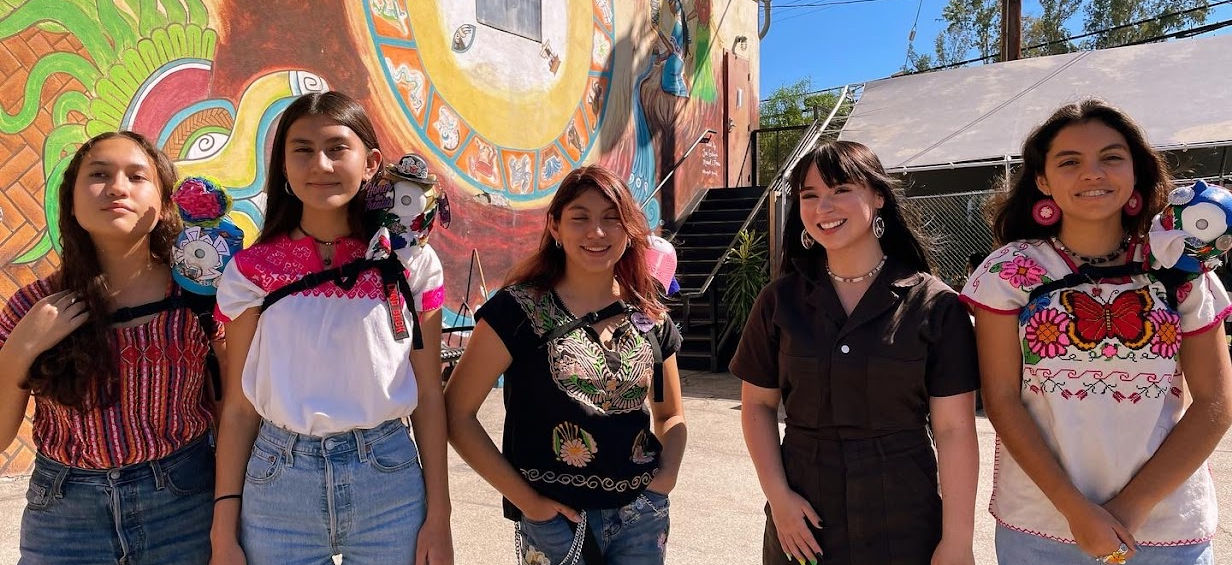
Photo credit: Steam Connection Danielle Boyer builds SkoBots, shoulder-mounted robots that speak Anishinaabemowin, and teaches Native students to build their own. Boyer, 25 and a member of the Sault Ste. Marie Tribe of Chippewa Indians, has mentored hundreds of students through a nonprofit she started at 18. NPR followed 12-year-old Holden Hoy as he demonstrated the SkoBot he programmed at his school science fair in Michigan’s Upper Peninsula. SkoBots run no generative AI. A trigger word starts playback of recorded audio. Boyer has watched large language models fabricate Anishinaabemowin, and she is direct about what feeding language data to outside companies costs a community. The robots work without internet access and go free to their respective communities. OpenAI and CodeAIOpenAI and CodeAI announced a partnership on August 18 alongside the launch of ChatGPT for Teens, a version with parental controls and use limits built in. CodeAI supplies the instruction meant to surround the tool, on how AI works and how to question what it returns. The number both organizations cite is the reason to pay attention: most high school students already use AI, while only 16% of high school leaders say all their students are being taught the technical knowledge to understand it. Worth reading before a vendor conversation reaches your district. Toshiba America Foundation Grants for K-12 EducatorsToshiba America Foundation offers grants for K-12 educators who want to bring project-based STEM learning into their classrooms. The foundation generally does not fund requests solely for equipment, but it does support innovative instruction that helps students build new skills. K-5 teachers can apply for up to $1,000, deadline October 1. Grades 6-12 can apply for up to $5,000 on a rolling basis, and requests above $5,000 are due June 1 or November 1. Share Ideas for the Next IssueIf you have a school project, a local event, or a resource worth sharing, send it along for the next newsletter draft. Alaska classrooms are doing interesting work, and the goal is to keep surfacing it. Professional Development
ASDN: The Efficient Teacher, Using AI to Work SmarterA three-credit course for K-12 teachers on building systems that cut administrative load: lesson planning, assessment, family communication, classroom organization, and differentiation, with AI used to take over routine work. Participants leave with their own set of workflows and templates rather than a tool list. No meeting times, and you do not have to be currently teaching to enroll.
ASDN: Unlocking the Potential of Artificial Intelligence in EducationA fully self-paced three-credit course covering how AI works, where it helps and where it does not, and what to do about policy. Participants evaluate tools including ChatGPT and Curipod, design lessons around them, and write or critique an acceptable use policy for their own school or district. Useful if you are the person your building asks about AI.
✉️ anthony.white@alaska.gov This newsletter is an initiative of the Division of Innovation & Education Excellence. We feature free, open-source resources. You are receiving this email because you signed up to receive information on K-12 computer science and digital literacy. |