codeAK
Empowering K-12 educators with free, open-source content and
news in computer science, digital literacy, and artificial
intelligence.

"Capping a student at a set number of minutes a week treats a well-built adaptive reading tool and mindless scrolling as the same thing. Blocking YouTube during the school day is sensible. Regulating a tool that gives a struggling reader real-time, individualized feedback by the same clock is not. Quality and implementation drive outcomes, not dosage." The New CSTA Standards Are Out. Alaska Needs a Chapter!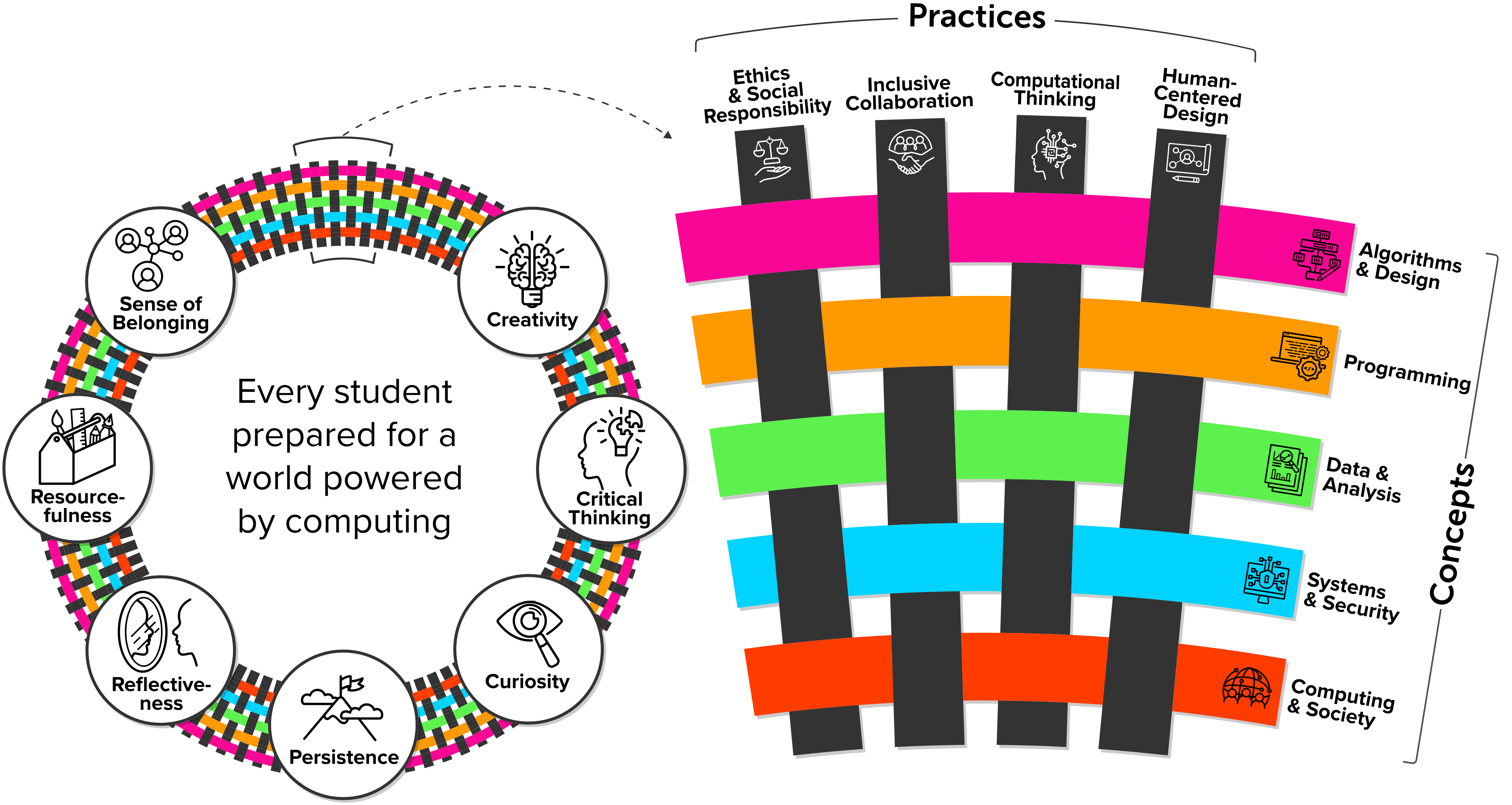
CSTA released the 2026 PK-12 Computer Science Standards in July, the first full revision since 2017. Five Concepts (Algorithms & Design, Programming, Data & Analysis, Systems & Security, Computing & Society) and four Pillars (Ethics & Social Responsibility, Inclusive Collaboration, Computational Thinking, Human-Centered Design). I am hosting an open meeting for anyone who teaches computer science, digital literacy, or anything computer-adjacent. You do not need to be a CSTA member to come. We will cover three things: what is in the 2026 standards, what a working Alaska CSTA chapter would look like, and who wants to help build it.
Spotlight on AlaskaKenai Peninsula Drafts Districtwide AI PoliciesKenai Peninsula Borough School District board members got their first look in July at a set of districtwide policy proposals on artificial intelligence. The proposals came from an AI committee the district established last year, facilitated by virtual learning coordinator Amanda Adams, which used DEED's state AI framework as its starting point. Rather than write a standalone AI policy, the committee is folding AI language into existing policy. One change bars staff from feeding student data into AI platforms the district has not approved. Another subjects AI use to the same guidelines that already govern social media. The largest proposed change rewrites academic honesty to define acceptable AI use and set consequences for misuse. District staff already have access to MagicSchool and Google Gemini plus training on both. Denali Borough School District Takes Up AI at the Board TableThe Denali Borough School District board devoted its May 28 work session to "Artificial Intelligence — A conceptual framework for consideration in a school environment." Board packet materials included Alaska's K-12 AI Framework, the AILit Framework review draft, and a brief on AI in rural schools. Send Us Your District's AI PolicyDEED is collecting AI policies from Alaska districts and publishing them so others can borrow language instead of starting from scratch. Anchorage, Bering Strait, Chugach, Copper River, Cordova, Dillingham, and Fairbanks North Star Borough are posted so far. If your district adopted or revised something this year, send it over with your district name, policy number, and any implementation notes. Back to SchoolStart the Year with DEED's AI District GuidanceIf your district is writing AI policy this fall, the guidance hub is built to be worked through in order: a six-step policy development process, a model board policy and companion administrative regulation you can adapt, a vendor vetting checklist covering FERPA and COPPA compliance, and a phased 12-month implementation guide. Deepfakes and Synthetic Media ‐ Modernizing PoliciesNationwide polling indicates roughly 15% of students are aware of AI-generated explicit images depicting their classmates. During the 2023-24 school year, 20% of middle schools and 22% of high schools reported bullying incidents involving AI-generated deepfakes. Only 23% of schools have updated their policies to address AI misuse. (Source: RAND Research, 2025) DEED's guidance covers what to change in acceptable use, anti-bullying, and student conduct policy; how to run a victim-centered incident response; and which Alaska statutes already apply (AS 11.61.120, AS 11.61.123, AS 11.41.455) alongside the federal TAKE IT DOWN Act.
First-Week Norms: Use the Data
Common Sense Media's 2026 census found 86% of kids ages 9-17 use AI, and nearly a quarter use it daily. Three-quarters say their school has told them what they can and cannot use AI for, but only about half have been taught how to use it safely. More than four in ten say no parent or guardian has ever discussed AI safety with them. Discussion: What does your class already know how to do with AI, and what has anyone actually taught them? Build the first-week norms conversation from the gap between those two answers. The Common Sense Media Census: AI Use by Tweens and Teens, 2026 Curriculum CornerCode.org Is Now CodeAI
Code.org has rebranded as CodeAI, formalizing a shift from coding-first to what it calls digital fluency: computer science, AI science, and data science together. The number driving it — 84% of students use AI, but only 16% of public high school leaders report students are taught how it actually works. Existing courses, accounts, URLs, and data agreements carry over. Two curricula are new or expanded:
Also worth a look for anyone in policy work: CodeAI published 10 Policies for Digital Fluency, a revision of the CS policy framework it has pushed in all 50 states. Experience AI ‐ Free Lessons for Ages 11-14Experience AI is a joint program from the Raspberry Pi Foundation and Google DeepMind, and it won the 2025 UNESCO King Hamad Bin Isa Al-Khalifa Prize for the Use of ICT in Education. The lessons come with plans, slide decks, worksheets, and videos, and are written so teachers outside CS can run them. Two companions worth knowing about: the Experience AI Challenge, an open-ended project where students train their own machine learning model and build an app around it, and Understanding AI for Educators, a free three-week online course. Day of AI Student Senate ‐ Students Write the AI Policy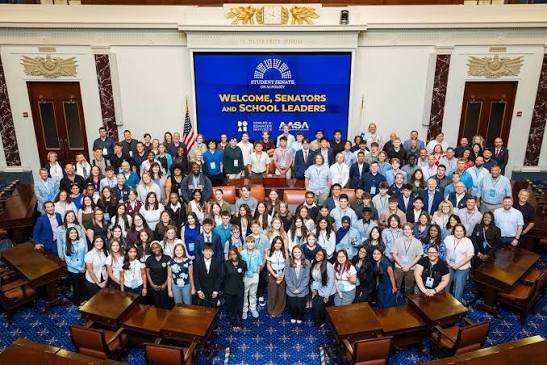
Day of AI, MIT RAISE, the Edward M. Kennedy Institute, and AASA built a free curriculum that puts students in the role of U.S. Senators drafting, debating, and voting on an AI policy for their own school. Students research how AI affects their community, gather stakeholder input, and produce a policy they can bring to school leaders. Two students from every state met in Boston on July 18-19 to debate a national policy on AI use in K-12 schools on the Senate floor at the EMK Institute. The classroom materials are free, self-paced, and would be a great addition to any student government organization. Watch: NOVA ‐ A.I. Revolution, Plus a Companion WorksheetThe one-hour NOVA documentary A.I. Revolution follows correspondent Miles O'Brien through what researchers were attempting with AI across medicine, climate science, and robotics. A companion worksheet for educators is posted on the Alaska Education Exchange, built to structure a class conversation about AI's impact on different industries. The film aired in 2024, which is the reason to use it rather than a reason to skip it. Two years is several eras in this field. Watch it with students and have them mark what has already happened, what has not, and what nobody in the film saw coming. Discussion: Which predictions in this film aged well? Which ones look naive now — and which ones were not ambitious enough? Upcoming EventsiDidaImpact: STEM for Change Comes to Alaska ‐ Q&A August 10ASTE is bringing STEM for Change to Alaska as a new iDidaImpact category! This is a hands-on, interactive, instructor-supported 10-week program in which students identify a real problem in their own community, build a solution for it, and then showcase that work to an audience well beyond their own classroom. There's also also opportunity for students to complete industry-recognized certifications from Pearson Career Ready. 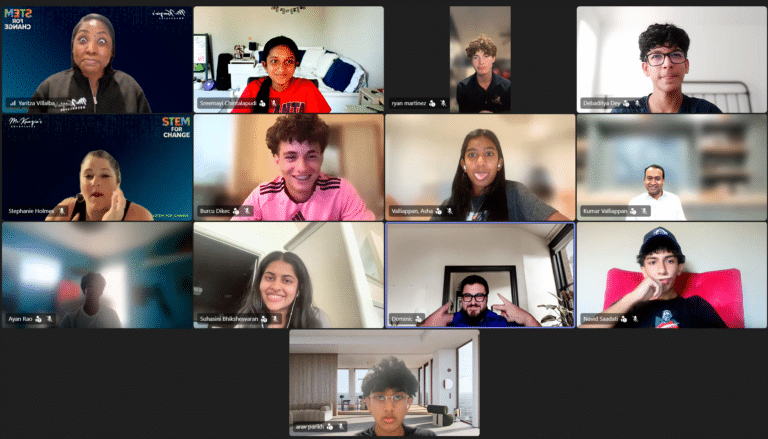
Students and educators get structured support the whole way through. If you have a CS class, a robotics team, a CTE program, or an advisory period that needs a real anchor project this year, start here.
The 24th Annual iDidaContestIf a 10-week commitment is more than you can take on this year, the traditional iDidaContest is still the low-lift way in. ASTE recognizes outstanding student work in photography, film, documentary, podcasting, music, books, and more, with several Social Studies categories through an ongoing partnership with the Alaska Council for Social Studies. New this year: categories for Digital Art, and a category specifically for projects that use artificial intelligence in their creation. CyberPatriot 19 ‐ Registration Open
Registration for the 2026-27 CyberPatriot season opened May 1. The National Youth Cyber Defense Competition puts middle and high school teams in charge of securing virtual networks.
Registration fees run $205 for high school teams and $165 for middle school teams, with waivers available for all-girl teams, Title I schools, and JROTC/CAP/NSCC teams. Team registration typically closes the first week of October. NASA TechRise Student Challenge ‐ Opens September
The 2026-27 NASA TechRise Student Challenge opens in September and invites teams in grades 6-12 to submit experiment ideas. This year's flight vehicle is the high-altitude balloon, offering roughly 4-8 hours at 70,000-95,000 feet with exposure to high-altitude radiation and Earth's atmosphere. Sixty winning teams receive $1,500 to build their experiment, a flight slot on a NASA-sponsored vehicle, and technical support from TechRise advisors. The challenge includes free classroom resources, a student virtual field trip in the fall, and information sessions on request. No experience necessary. Ciena Solutions Challenge ‐ September 1The Ciena Solutions Challenge is a free global design challenge run by Digital Promise and Ciena. Students work through Challenge Based Learning — Engage, Investigate, Act — to build a solution to a real problem in their community tied to a UN Sustainable Development Goal. From September 1, 2026 through March 8, 2027, educators can apply for $3,000 Sustainability Awards to sustain and scale student projects. Congressional App Challenge ‐ Deadline October 26Registration is open. Middle and high school students build an app in any language and submit it with a demo video. Students can compete individually or in teams of up to four. Submissions close October 26, 2026 at 12:00 PM ET. Winners are recognized by their member of Congress. NCWIT Aspirations in Computing ‐ Applications Open September 1
The AiC High School Award recognizes 9th-12th grade students for computing-related achievement and interest. Applications for the 2026-27 season open September 1, 2026 and close October 27, 2026. Applicants join the AiC Community first, then apply. It is a low-lift nomination that puts Alaska students in front of a national network of scholarships and internships. Professional Development
ASDN: AI for Teaching, Learning, and Leadership K-12Four sessions with Rob Dickson and Dyane Smokorowski covering ChatGPT and Google Gemini for designing standards-aligned materials, personalizing learning, and thinking strategically about your own growth. Grounded in Universal Design for Learning.
ASDN: Digital Well-Being Is a School CultureA three-part series with Sue Thotz of Common Sense Media on the "frictionless design" pulling kids away from real relationships, and what schools can do about it. Starts with staff, widens to students, then to families and communities.
Free CS and AI PD Through ASDN and CodeAIASDN is Alaska's regional CodeAI partner and has run CS professional learning here for seven years, reaching over 1,000 Alaska teachers. Courses are free, align to Alaska State Computer Science Standards, and districts can request PD tailored to their own K-12 CS planning.
✉️ anthony.white@alaska.gov This newsletter is an initiative of the Division of Innovation & Education Excellence. We feature free, open-source resources. You are receiving this email because you signed up to receive information on K-12 computer science and digital literacy. |