codeAK
Empowering K-12 educators with free, open-source content and
news in computer science, digital literacy, and artificial
intelligence.

"A popular analogy is that using an LLM to write your essay is like driving a forklift into the weight room. Weights get lifted, sure, but nothing is accomplished." — Scott K. Johnson, "To teach in the time of ChatGPT is to know pain" Spotlight on AlaskaBethel's Dirt Busters Win at WAISC, Advance to NationalsThe Bethel Dirt Busters (FLL Team 522) earned the Todd Rodenbaugh People's Choice Award at the Western Alaska Interdisciplinary Science Conference (WAISC) in April for work that promotes science, innovation, and education in Western Alaska. The team built an archaeology-themed robot and produced an Alaska-based archaeology activity book for students. They also took second place in the Innovation Project Award at the statewide FLL Challenge and are advancing to the national competition later this year. Congratulations to the team and their coaches! 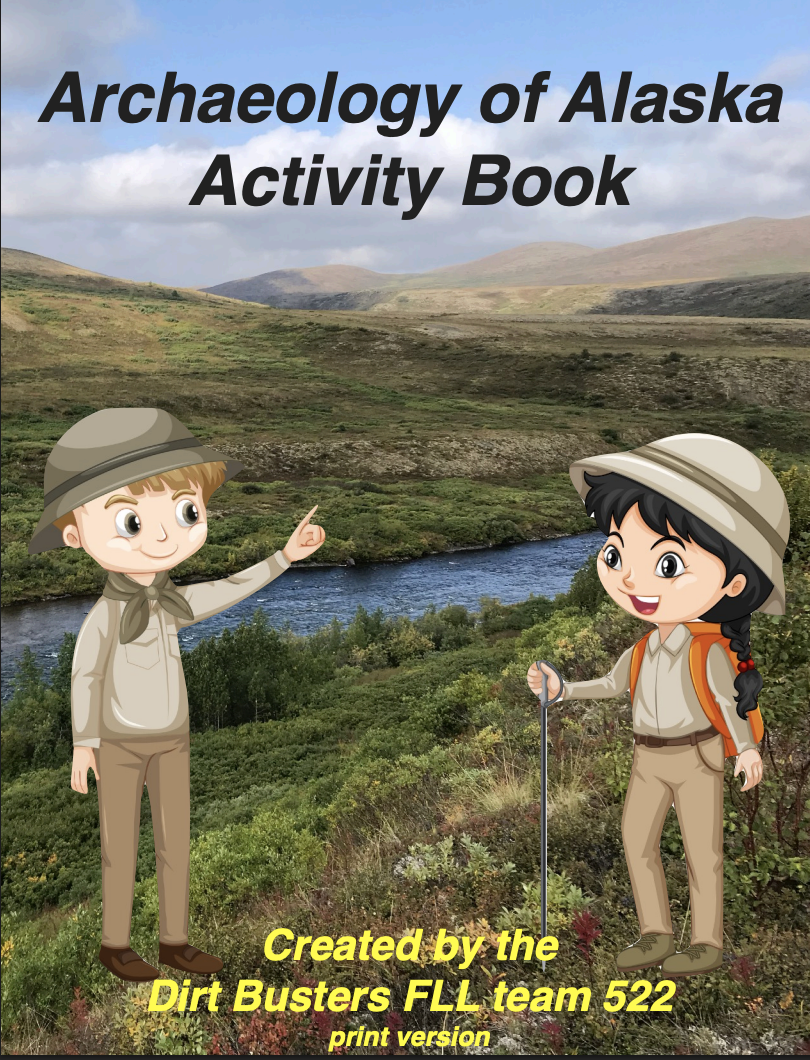
Photo credit: Sarah Clement. Originally shared in the AK STEAM Collaboration Newsletter, Spring 2026. Mat-Su Hosts First Drone Career DayWasilla High School hosted Mat-Su's first drone career day in late April, with Valdez-based AK Drone leading four hands-on classes for students. Co-founder Thomas Tapp demonstrated drones equipped with LiDAR sensors and cameras and walked students through real Alaska use cases: mining, construction, surveying, law enforcement, and wildlife counting. 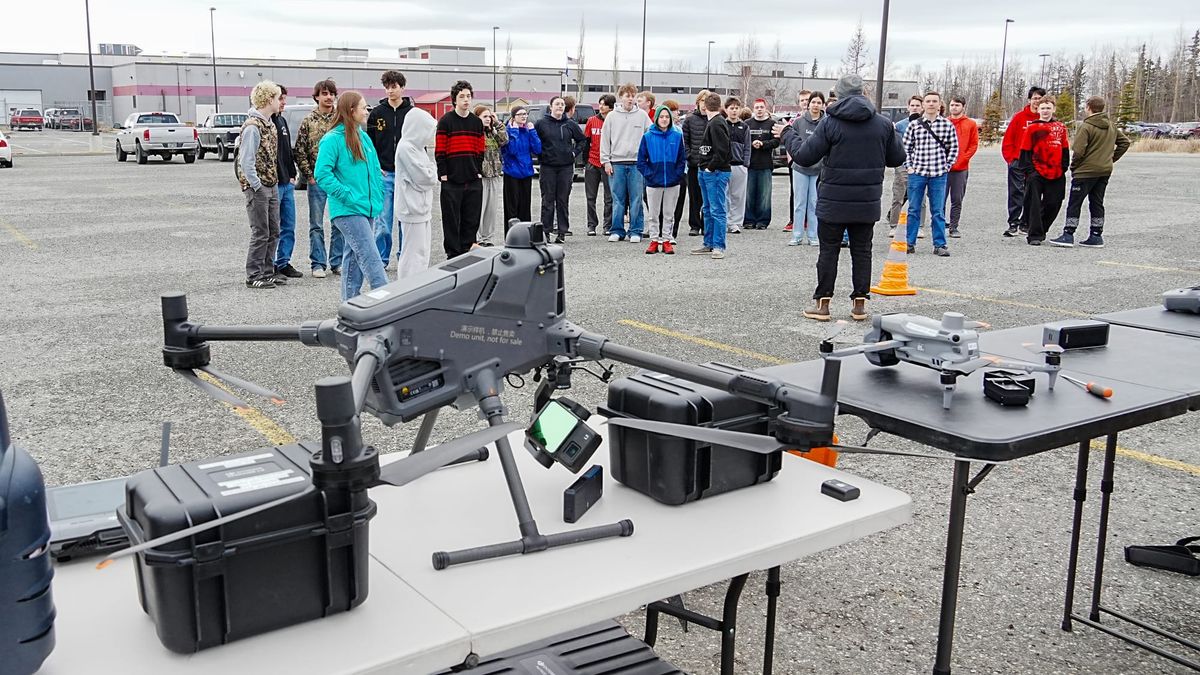
Photo credit: Amy Bushatz, Mat-Su Sentinel The event is part of the district's broader CTE work and was coordinated by Wasilla High robotics teacher Leslie Wangeman. Drone licensing is available through a straightforward online certification process, making this a low-barrier career path for students interested in the field. T3 Alaska — Engineering a Community Project Presentations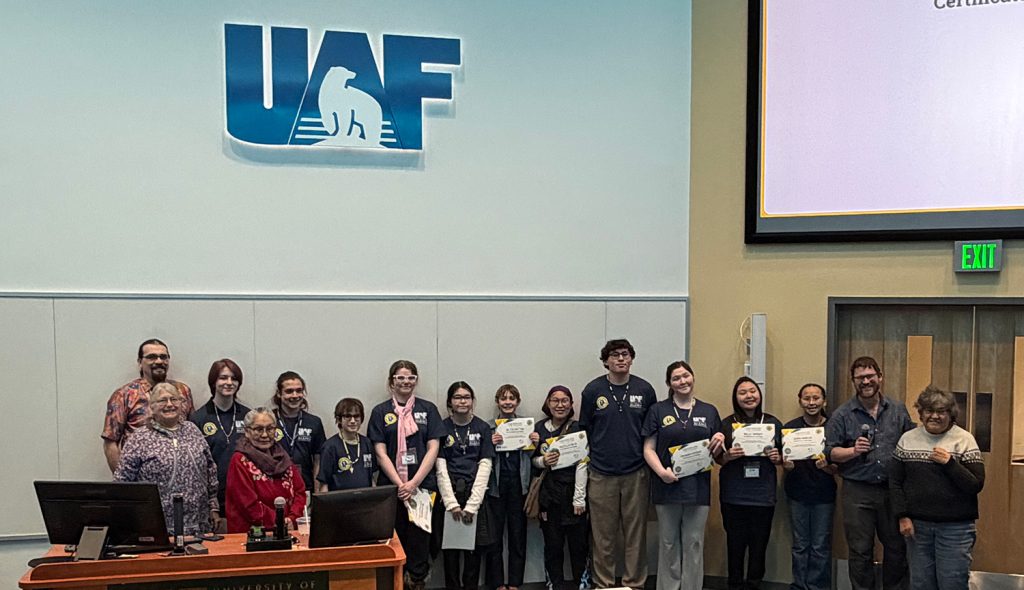
In late February, T3 Alaska students from Cordova, Anchorage, Minto, and Galena traveled to Fairbanks for a multi-day residential experience at the Yukon-Koyukuk CTE Learning Center, coinciding with UAF CEM Engineering Week . Students leaned into project-based learning, earned T3 badge certifications and UAF credit, and were mentored by Elders and community partners. Their final project presentations were recorded and shared widely with a strong network of supporters, a great example of how community-driven engineering work builds both technical skills and student leadership. Curriculum CornerAI Slop Everywhere — Even When It's Labeled EducationalA Common Sense Media piece warns that AI-generated "slop" is increasingly showing up in spaces marketed as educational. For elementary students, focus on basic media literacy, the difference between fact and fiction, and talk openly about how AI-generated videos can carry incorrect information, then debunk examples together. For middle and high schoolers, use Common Sense's AI literacy lessons for grades 6-12 and challenge students to find AI errors in the wild and bring them in to pick apart. Discussion: Are there any upsides to AI-generated brainrot? What about for little kids learning the basics? What can we do to help prevent harm? CRAFT — Free AI Literacy Resources from StanfordCRAFT (Classroom-Ready Resources About AI for Teaching) is a co-design initiative from the Stanford Graduate School of Education and the Stanford Institute for Human-Centered AI. The collection offers free, multidisciplinary AI literacy resources for high school teachers. Co-designed with educators across multiple subject areas, the materials help art, math, English, and history teachers integrate AI literacy into existing instruction. Activities range from 15-minute warm-ups to multi-day lesson sequences designed to fit "the nooks and crannies" of teaching time. Two New Day of AI Units: Climate Data and AI's Environmental ImpactDay of AI has released two new units that pair well for an Earth Day or environmental science block. Telling Climate Stories with Data is a 4-5 hour project-based unit where students use Python to clean and visualize real climate datasets, identify trends, build simple predictions, and turn their findings into creative stories. The Impact of AI on the Environment is a shorter 2-3 period unit where students examine AI's carbon footprint, audit their own digital habits, and create a personal sustainability pledge. Raspberry Pi Experience CS — Full K-8 Curriculum Now AvailableThe Raspberry Pi Foundation has completed its Experience CS elementary and middle school curriculum: 18 standards-aligned units, three per grade for grades 3-8, that integrate CS concepts directly into core subjects like math, science, language arts, and the arts. The Foundation has also launched a new online course, Using PRIMM to Teach Programming, a short, practical professional learning experience that walks educators through a structured approach to teaching programming. Reading: Teaching Elementary Students Computational Thinking in the Age of AIEdutopia contributor Debra Jacoby makes the case that elementary CS teachers are more important, not less, in the age of AI. Drawing on her own classroom, she walks through specific skills that have new value when AI is in the picture: writing pseudocode before touching a keyboard, using rubrics to peer-review AI-generated code, debugging through pattern recognition, and exposing classification errors with tools like Google's Teachable Machine. The throughline: students can't fix AI's mistakes if they don't know the language and logic first. Tool of the Day: Godot Web EditorGodot is a free, open-source 2D and 3D game engine, and an experimental web-based version of the editor is now available, letting students start building games directly in the browser without installing anything. Worth flagging: the web editor is explicitly experimental, and your mileage may vary. The downloadable desktop version is the more stable option for sustained classroom use. Try the Godot Web Editor (experimental) | Download desktop Godot Artemis II — Explore NASA's Return to the MoonThis interactive site walks students through the components of the Artemis II spacecraft, with a timeline of the mission and detailed information on each part of the rocket and Orion capsule. A solid fit for science classes covering propulsion, systems engineering, or human spaceflight. It is also a natural lead-in to the NASA AI Q&A event listed below. Upcoming EventsJoin NASA for a Chat About AI — Tuesday, May 12Code.org and NASA are co-hosting a live Q&A event for classrooms on Tuesday, May 12 at 8:00 AM AKST. NASA AI expert Martin Garcia will answer student questions about how the agency uses artificial intelligence to support exploration and scientific discovery, from analyzing telescope imagery to optimizing mission operations. Two ways to participate: register your class to submit questions in advance, or watch the live stream the day of. Register your class for the Q&A | Watch live on Learn With NASA YouTube LEGO Build the Change Educator CohortTake Action Global (TAG), an international nonprofit working with educators in 150+ countries, is opening its final LEGO Build the Change Educator Cohort of the year. Over a few weeks, participants explore Learning through Play as a pedagogy, run hands-on design challenges tied to real-world climate issues, and connect STEM, CS, and sustainability through student-driven design thinking. Resources are ready-to-use, the lift is low, and you join a global cohort of educators. News & OpportunitiesUDL4CS Research Study — Apply by May 17CSTA is recruiting PK-8 school teams for UDL4CS, a year-long paid research study examining how Universal Design for Learning (UDL) and High-Leverage Practices can support inclusive computer science instruction for students with disabilities. Each team needs 2-6 educators, including at least one special education teacher and one CS or general classroom teacher. No prior CS experience is required. Participants attend a virtual summer PD week July 27-31, 2026, ten monthly 90-minute PLCs during the 2026-27 school year, and a spring 2027 showcase. Each educator receives up to a $1,250 stipend. Priority goes to public schools serving large numbers of students with disabilities and historically marginalized populations. Application deadline: Sunday, May 17, 2026 Apply to join the study | Research & project team | UDL4CS Resource Hub Grant Opportunity: STEM Stars from the Glenn W. Bailey FoundationThe Glenn W. Bailey Foundation is accepting applications for its STEM Stars Grant Program, supporting middle and high school STEM programs that prepare students for college and STEM careers. Awards are up to $25,000, with a typical award around $10,000, and the deadline is rolling. The foundation prioritizes hands-on, project-based learning, specialized tracks like robotics and biotech, real-world lab and industry access, and partnerships with universities or industry. Administrative costs are capped at 10%. Strong applications include curriculum, partnerships, and measurable student outcomes. STEM Stars is one of several grant programs the foundation offers, worth browsing if your work touches other areas. Sweden Hasn't Banned EdTech — They've Set StandardsDespite headlines suggesting Sweden has ripped technology out of its schools, the actual policy is more measured. Devices have been removed for the youngest learners, physical textbooks are replacing default screen time in early grades, and laptops remain in secondary classrooms, but only when they demonstrably enhance learning. Mobile phones are banned during the school day across the board. The author argues this is not a retreat from EdTech; it is a national-policy version of what good IT directors and school leaders have demanded all along: evidence of pedagogical value before adoption. Professional DevelopmentCSTA MENTORS in CS — Mentorship for Experienced and Emerging TeachersBig news! CSTA's MENTORS in CS program, funded by the National Science Foundation, is going national! This year, they're welcoming CS teachers from across the country into their 2026–27 cohort. New to CS teaching? Get free, personalized 1:1 mentorship from an experienced CS teacher plus a $500 stipend for participating. Seasoned CS teacher? Get paid up to $2,000 to mentor a newer colleague and join a thriving community of practice. All CSTA members are eligible to apply. Mentor applications close May 22nd. Learn more and apply | Questions? Email mentors@csteachers.org AI Literacy for K-12 Educators — Self-Paced Course (Starts May 18)
Offered by the Alaska Staff Development Network (ASDN), this asynchronous course is designed for K-12 educators who want to lead AI conversations in their schools and districts with confidence. Participants learn how generative AI works, how to evaluate AI tools, the ethics of bias and copyright, prompt engineering basics, and practical classroom strategies. Graduates leave with a working plan for using AI thoughtfully and tools to guide colleagues.
✉️ anthony.white@alaska.gov This newsletter is an initiative of the Division of Innovation & Education Excellence. We feature free, open-source resources. You are receiving this email because you signed up to receive information on K-12 computer science and digital literacy. |