codeAK
Empowering K-12 educators with free, open-source content and
news in computer science, digital literacy, and artificial
intelligence.

"Making code cheap to generate doesn’t make understanding cheap to skip. The comprehension work is the job. You will pay for comprehension sooner or later. The debt accrues interest rapidly." Spotlight on AlaskaKodiak Middle School: Internet Safety Posters in CanvaStudents at Kodiak Middle School have been channeling their creativity and digital literacy skills to design Internet Safety Posters using Canva. Under the guidance of educator Alexis Jackson, students explored topics like online privacy, cyberbullying prevention, and responsible digital citizenship, then brought those concepts to life through eye-catching graphic designs. This project is a great example of how digital design tools can be integrated into meaningful lessons that build both technical skills and critical awareness. Thank you to Alexis Jackson and Kodiak Middle School for sharing this inspiring work! 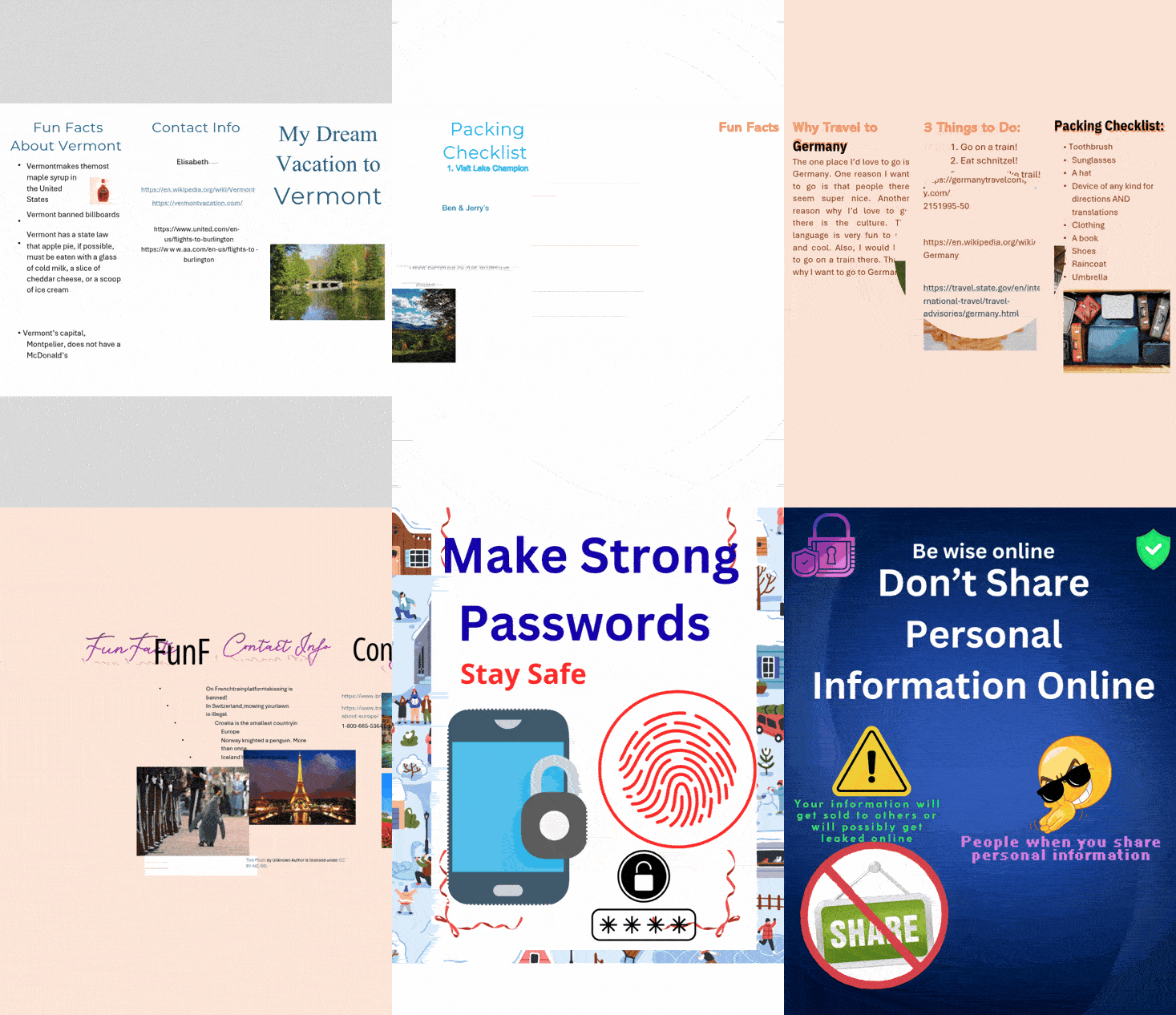
Student work from Kodiak Middle School ‐ View the full showcase Lesson Plans & Rubrics by Alexis Jackson: Share What's Happening in Your Community!We want to shine a light on the exciting computer science and digital literacy initiatives happening across Alaska. Are your students building an innovative app? Is your school hosting a coding event, or are you integrating new technology in the classroom? Let us know what's happening in your corner of the state, and you could be featured in a future newsletter. Curriculum CornerFeatured: Aligning CS/Digital Literacy Standards to Game Development and Interactive 3D CareersHow do Alaska’s computer science and digital literacy standards connect to careers in game development, simulation, and interactive 3D media? This resource maps standards to real-world career pathways in one of the fastest-growing sectors of the tech industry, giving educators a clear bridge between what students learn in the classroom and the skills employers are looking for. Whether you teach CS, digital media, or CTE courses, this alignment guide can help you show students how their coursework translates into career-ready skills in game design, 3D modeling, animation, XR development, and more. 
A Student Self-Reflection Checklist for Strategic GenAI Use
This checklist is designed to be a practical tool to help students build safe, ethical, and effective habits when using GenAI. It helps students reflect on their current AI use, recognize where GenAI is supporting their learning, and identify when they may be over-relying on the technology. Designed for both classroom use (discussions, small groups, conferences) and independent student reflection to set goals and track AI literacy development. Instagram Stories Template for the ClassroomLooking for a creative way to engage students with digital storytelling? Ditch That Textbook offers a free Instagram Stories template for Google Slides that lets students summarize learning, retell stories, or present research in a format they already love. AP Career Kickstart: AP CybersecurityAP Career Kickstart expands the AP Program by offering high schools a new group of career courses and exams that can be easily tailored to fit into existing CTE programs of study. The new AP Cybersecurity course offers students the opportunity to earn college credit and a credential, and aligns with the National Initiative for Cybersecurity Education (NICE) Workforce Framework. National launch is planned for 2026-27. Human & Machine: Exploring Poetry, Emotion, and Voice (Grades 6-8)
A rigorous ELA unit where students analyze voice, poetic devices, and emotion in poetry and debate authorship, while building real AI literacy skills! Tool of the Day: FreeCADFreeCAD is a free, open-source 3D parametric modeler perfect for introducing students to computer-aided design (CAD). It supports designing real-life objects of any size and is a great companion for 3D printing projects, engineering coursework, and maker spaces. CTE Computer Science PathwaysAs showcased in the DEED 2026 Perkins Workshop, this resource provides information about Computer Science pathways, including curriculum, associated CTSOs, and implementation resources for your district. Looking to start up a CTE Computer Science, Artificial Intelligence, or Digital Media pathway? This is a starting point. Interactive Resource DatabaseWant to explore more resources, lessons, and curriculum related to AI, CS, and Digital Literacy? Check out this interactive database of curated resources aligned to grade levels, subject areas and resource types. Upcoming EventsUAA Summer Engineering Academies
The University of Alaska Anchorage College of Engineering is offering Summer Engineering Academies for students interested in exploring engineering fields. These programs provide hands-on experiences in various engineering disciplines. MIT AI Youth Festival — Deadlines Extended to April 7!Great news — the submission deadline for the MIT AI Youth Festival has been extended by one week! All entries are now due April 7. Whether your students love art, performance, or solving real-world problems, there's still time to submit their work. 🎨 Me, Myself, and AI — Students create artwork imagining their community 50 years in the future and how AI might shape the world they live in. 🎭 AI Live — Students submit original music, dance, or theater performances exploring how AI influences our lives, creativity, and society. Girls Who Code 2025-26 ChallengeGirls Who Code has partnered with IBM to bring you IBM SkillsBuild: a free, online, skills-based platform to support your career journey. Girls Who Code has developed curated sets of resources to help direct your learning, plus unlimited access to digital credentials, microlearnings, and guided learning experiences on topics from emerging tech to professional development. Girls Who Code Learning Plans:
2026 Global Appathon
The App Inventor Foundation and MIT App Inventor are excited to announce that registration is open for the 2026 Global Appathon! This no-cost, virtual hackathon encourages people of all ages to use MIT App Inventor to build mobile apps for a cause. This year's theme is based on the United Nations' 17 Sustainable Development Goals. Winners will be invited to present their projects at the Global Education Summit at MIT on July 6-8, 2026. There are six award categories:
Submissions due: April 15, 2026 OECD Digital Education Outlook 2026 ConferenceThe Organisation for Economic Co-operation and Development (OECD) hosted a conference on "Effective Uses of Generative AI in Education" as part of the Digital Education Outlook 2026 series. This event features international perspectives on how generative AI is being used in educational settings around the world. News & OpportunitiesK‐12 Education Grant Funding Guide for 2026EdTech Magazine has published a comprehensive grant funding guide for K-12 education in 2026. This resource helps educators and administrators identify funding opportunities to support technology initiatives, professional development, and innovative classroom projects. Driving K-12 Innovation: 2026 CoSN ReportThe Consortium for School Networking (CoSN) has released its 2026 report on the hurdles, accelerators, and technologies driving innovation in K-12 education. This annual report identifies the key trends and challenges shaping education technology. Understanding the Evidence Base for AI in K-12 EducationStanford's research explores what we currently know about AI's effectiveness in K-12 education settings and where the evidence gaps remain. A must-read for leaders making decisions about AI adoption in schools. AI Literacy Guides for EducatorsThis growing collection of AI literacy guides from Med Kharbach offers clear, practical support that helps educators make informed decisions about AI in ways that align with their pedagogical values and professional responsibilities. Includes resources such as "AI and Critical Reading: 5 Classroom Strategies for Teachers," "NotebookLM in Teaching," and more. Professional DevelopmentThe Beauty and Joy of Computing (BJC) Summer WorkshopsBJC is a College Board-endorsed AP Computer Science Principles curriculum and professional development based on the themes of creativity and social impacts. This summer, BJC is offering workshops for both their middle/early high school curriculum and their high school curriculum. BJC emphasizes the joy and complexity of creating visual computer programs and apps, balanced with critical reflection on both the potential benefits and harms of new computing technologies. BJC also offers BJC Sparks for middle school and early high school, a course that teaches a functional approach to programming with exciting projects in graphics, data, and media. No prior CS experience is necessary, and all materials are free. Workshop Options:
*Stipend spots are limited. Priority will be given to those who apply before May 31, 2026. AlaskaX ‐ Free Online Courses from UAFThe UAF Center for Teaching and Learning offers a wide range of free MOOC courses through AlaskaX to help advance your knowledge and career. Course topics include "Teaching and Learning in the Era of AI," 3D Printing Essentials, GIS Foundations, Unmanned Aerial Systems (UAS), and more.
✉️ anthony.white@alaska.gov This newsletter is an initiative of the Division of Innovation & Education Excellence. We feature free, open-source resources. You are receiving this email because you signed up to receive information on K-12 computer science and digital literacy. |